Tangible Asset Valuation: A Comprehensive Guide for Modern Businesses
In contemporary business operations, accurate financial reporting, strategic decision-making, and regulatory compliance are all based on tangible asset valuation. In contrast to intangible assets like goodwill or patents, tangible assets have physical substance that can be directly observed, measured, and handled. The complexities of valuing physical assets are examined in detail in this extensive guide, which offers useful advice to accountants, financial analysts, entrepreneurs, and investors who must base their decisions on accurate asset valuations.
Understanding Tangible Assets
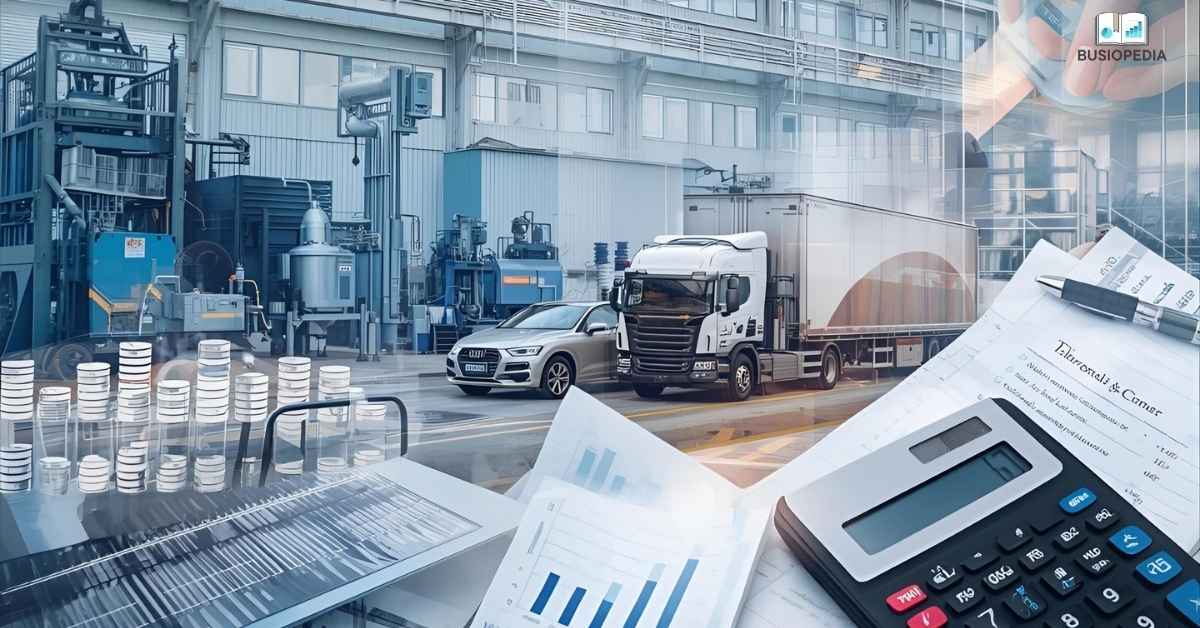
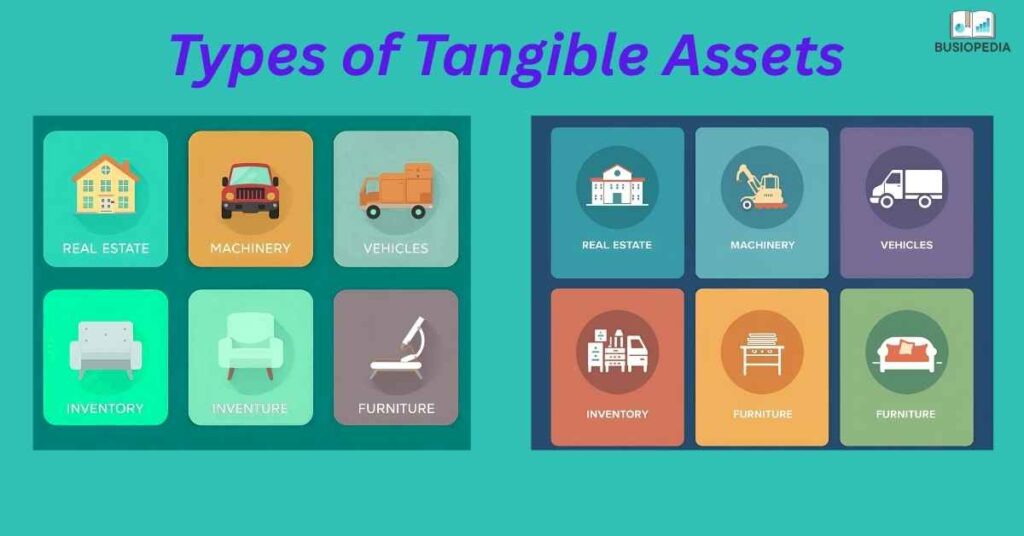
The physical basis of corporate operations consists of tangible assets, which include everything from office buildings and manufacturing machinery to delivery trucks and inventory. These assets are distinguished by their tangible existence and their capacity to be sold directly or through operational use to generate cash. The accuracy of balance sheets, depreciation computations, insurance coverage, loan collateral evaluations, and merger and acquisition deals is all directly impacted by the valuation of tangible assets.
Accurate tangible asset valuation is important for reasons other than merely complying with accounting regulations. Businesses use these valuations for performance evaluation, asset replacement planning, and capital budgeting decisions. While investors examine these numbers to gauge the stability and growth potential of the company, lenders use the values of tangible assets to determine loan security. Furthermore, accurate valuations are needed by tax authorities and regulatory bodies to comply with accounting standards and tax duties.
Categories of Tangible Assets
Property, Plant, and Equipment (PPE)
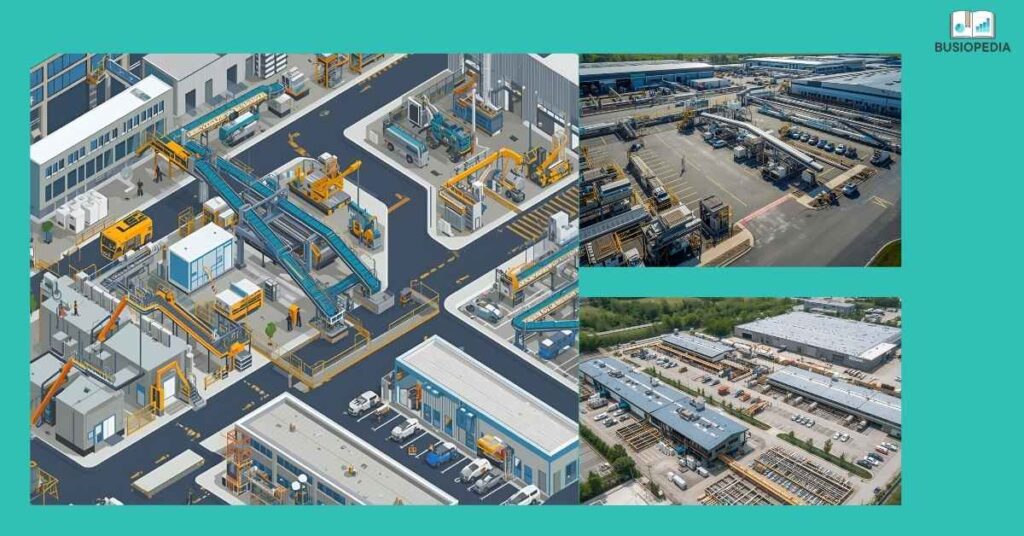
For most businesses, the largest category of tangible assets is property, plant, and equipment. Land, buildings, machinery, vehicles, furniture, and manufacturing equipment are all included in this. Because PPE assets are usually retained for extended operational use rather than for sale, their valuation is essential to comprehending the operational and financial capabilities of a business.
Since land typically doesn’t lose value over time and can increase in value due to market conditions or location improvements, it has special value in asset valuation. However, depreciation, upkeep requirements, and market conditions must all be carefully taken into account when designing buildings and structures. Due to their specialized nature, fluctuating market demand, and technological obsolescence, industrial machinery and equipment pose unique challenges.
Inventory Assets
Work-in-progress items, raw materials used in production, and goods held for sale in the regular course of business are all considered inventory. Seasonal variations, market demand, obsolescence risk, and storage expenses must all be taken into account when valuing inventory assets. Technology companies managing component obsolescence and fashion retailers juggling seasonal trends are just two examples of the distinct inventory valuation challenges faced by various industries.
Approaches to valuation are directly impacted by inventory nature. Specialised industrial components require professional evaluation of their usefulness and market demand, while fast-moving consumer goods need to be regularly reevaluated to reflect market conditions. Factors like expiration dates and quality degradation increase the complexity of perishable inventory.
Natural Resources
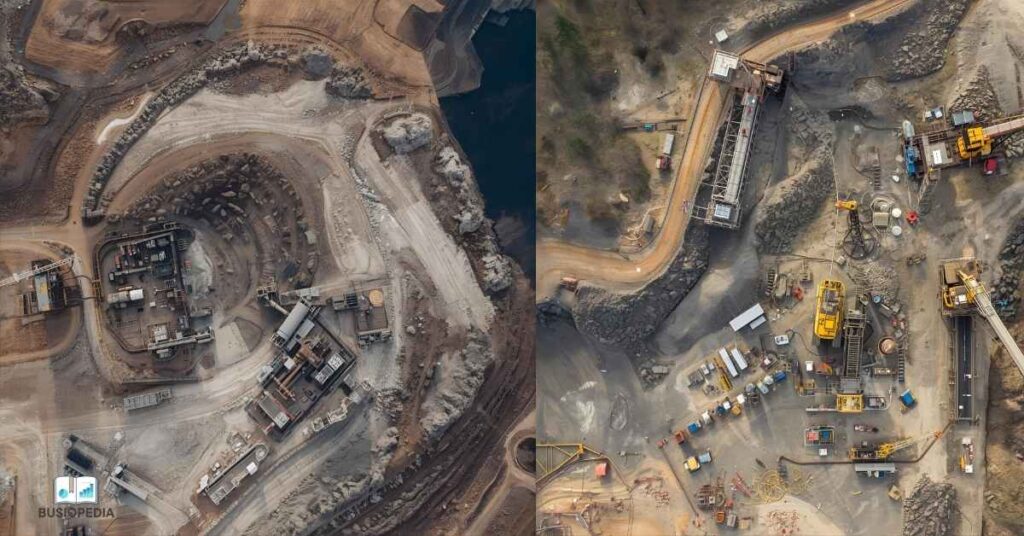
Natural resources are important physical assets for businesses in the extraction sector. Specialized valuation methods are needed for oil reserves, mineral deposits, timber stands, and agricultural land. These methods must take into account market prices, extraction costs, legal constraints, and environmental considerations. Geological surveys, market research, and evaluations of regulatory compliance are frequently included in these valuations.
Valuation Methods for Tangible Assets
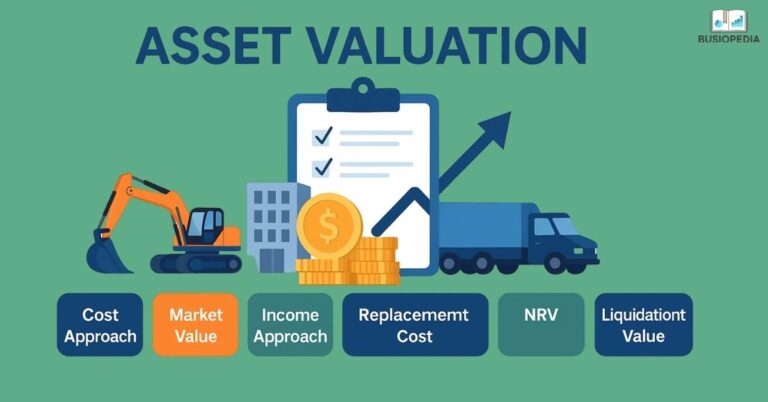
Cost Approach
Particularly when it comes to financial reporting, the cost approach is the cornerstone of tangible asset valuation. The initial acquisition cost is used in this method to determine asset value, which is then modified to account for accrued depreciation and any impairment losses. The method is appropriate for regular financial reporting since it offers objectivity and auditability.
Historical Cost Method: This simple method adds any capitalized improvements or installation costs to the initial purchase price. The historical cost basis would be $160,000 for a manufacturing machine that was bought for $150,000 and required $10,000 for installation. Over the asset’s useful life, this value is systematically decreased by annual depreciation.
Replacement Cost Method: calculates the present cost of replacing the asset with a comparable product that offers the same level of utility. This amount becomes the replacement cost basis if the same machine now costs $180,000. This sum may be lowered to reflect the state and usefulness of the current asset after accounting for physical deterioration, functional obsolescence, and economic obsolescence.
Worked Example – Manufacturing Equipment: An injection moulding machine purchased in 2020 for $200,000 with a 10-year useful life and $20,000 salvage value. Using straight-line depreciation: Annual depreciation = ($200,000 – $20,000) ÷ 10 = $18,000. After 4 years, book value = $200,000 – (4 × $18,000) = $128,000.
Market Approach
The market approach uses comparable asset prices in active markets to calculate value. Standardized assets with well-established secondary markets, like common office equipment, standard cars, or commercial real estate, are good candidates for this approach.
Comparable Sales Analysis: Analyzing recent sales of comparable assets while accounting for variations in age, condition, location, and specifications is known as comparable sales analysis. Factors pertaining to real estate include building condition, market timing, square footage, and desirable location. Age, usage hours, maintenance history, and technological currency are all factors to take into account when it comes to equipment.
Dealer and Auction Pricing: Pricing information for particular asset classes is provided by specialized markets. Real estate brokers, auto dealers, and equipment auctions all provide market-based pricing that takes into account the state of supply and demand. These prices need to be modified to account for market conditions and transaction costs.

Income Approach
The income approach bases the value of material assets on their potential to produce future financial gains. This approach works especially well for properties that generate revenue and specialized equipment that is essential to running a business.
Discounted Cash Flow Analysis: This advanced method uses a suitable discount rate to project the asset’s future cash flows and discount them to present value. The value calculation for a rental property that generates $50,000 a year with a 10% discount rate and 5% growth entails projecting the income for each year and using the discount formula.
Capitalization of Income: This streamlined method divides yearly income by a capitalization rate for assets that produce steady income streams. With an 8% cap rate, a warehouse that makes $100,000 a year would be worth $1,250,000 ($100,000 ÷ 0.08).
Specialized Valuation Considerations For Tangible Assets
Depreciation and Obsolescence
Three factors can reduce the value of tangible assets: economic obsolescence, functional obsolescence, and physical deterioration. Normal use causes wear and tear that leads to physical deterioration. When newer technology offers better performance or efficiency, it becomes functionally obsolete. External factors such as changes in the market or regulations are the cause of economic obsolescence.
Physical Deterioration Assessment: In order to assess wear patterns, maintenance history, and remaining useful life, physical deterioration assessment calls for engineering expertise. Even with proper maintenance, a delivery truck with 200,000 miles may have substantial physical deterioration that lowers its value and shortens its useful life.
Technology Obsolescence: As technology advances quickly, asset values can be rapidly depreciated. Technological obsolescence poses a special risk to manufacturing machinery, computer equipment, and telecommunications systems. Even if a server system is in perfect physical condition, its processing speed may limit its usefulness after five years.

Market Conditions Impact
External market conditions greatly influence the value of tangible assets. While supply shortages may cause values to rise above historical averages, economic downturns can lower equipment and real estate prices. Industry-specific factors also play important roles in valuation.
Economic Cycle Effects: Market values usually decline during recessions as a result of a decline in the demand for industrial equipment. On the other hand, economic growth might raise values and demand. Similar cyclical patterns, with regional variances, are seen in real estate markets.
Industry-Specific Factors: Drilling equipment values are impacted by changes in oil prices. The amount of construction activity affects the value of heavy machinery. As demonstrated by the impact of emission standard updates on diesel truck valuations, regulatory changes can have an effect on vehicle values.
Practical Valuation Process of Tangible Assets
Planning and Preparation
Establishing a clear objective definition and scope is the first step towards effective tangible asset valuation. Method selection and accuracy requirements are influenced by the valuation purpose, which may include financial reporting, insurance, lending, or transaction support. Documentation and asset identification are essential first steps.
Asset Inventory and Documentation: Purchase dates, prices, specifications, maintenance records, and evaluations of the assets’ current state are all included in comprehensive asset records. Systems for digital asset management assist in keeping current, accurate data that supports valuation procedures.
Valuation Team Assembly Multidisciplinary teams comprising accountants, engineers, appraisers, and industry experts are beneficial for complex valuations. Every professional offers a unique area of expertise to guarantee thorough and precise valuations.
Data Collection and Analysis
Reliable valuations are supported by extensive data collection. Financial documents, maintenance logs, usage data, and performance metrics are examples of internal data. Market prices, industry standards, and economic indicators are examples of external data.
Market Research: A variety of sources, such as trade journals, auction outcomes, dealer prices, and broker projections, are used in effective market research. Comparable transaction data is accessible through professional networks and online databases.
Physical Inspections: Inspections conducted on-site confirm asset conditions, pinpoint maintenance requirements, and evaluate operational standing. Expert inspectors are able to spot problems that are hidden in documentation, which has a big influence on appraisals.

Valuation Execution and Documentation
Thorough documentation and methodical execution are necessary for professional valuations. The choice of method should be in line with the goal of valuation, the properties of the assets, and the information at hand. Cross-verification and reliability improvement are offered by several approaches.
Calculation and Analysis: Review and verification are made possible by thorough computations with underlying assumptions. Sensitivity analysis identifies critical variables and uncertainty ranges by testing the effects of important assumptions on final values.
Report Preparation: Executive summaries, methodology explanations, thorough computations, documentation of assumptions, and conclusions are all included in professional valuation reports. A clear presentation helps stakeholders understand findings and limitations.
Challenges and Best Practices For Tangible Assets
Common Valuation Challenges
There are many difficulties in valuing tangible assets that call for expert judgment and knowledge. Specialized assets may lack comparable market data, requiring creative analytical approaches. Assessing obsolescence and estimating useful life are made more difficult by the rapid advancement of technology.
Data Restrictions: Comparable transaction data is limited because many physical assets do not have active secondary markets. Specialized industrial equipment may have few relevant comparables, requiring adjusted pricing from similar but not identical assets.
Regulatory Compliance: Specific requirements for valuation techniques and documentation are imposed by tax laws and accounting standards. Different standards and currency considerations make international operations more complex.
Best Practices Implementation
Professional development, standardized processes, and frequent review cycles are all components of successful tangible asset valuation programs. While upholding audit trails and documentation standards, technological tools improve accuracy and efficiency.
Regular Revaluation Programs: Systematic revaluation schedules ensure current values for critical assets. While stable assets need revaluation every three to five years, high-value or quickly changing assets need updates every year.
Quality Assurance Processes: Independent reviews, multiple method applications, and sensitivity analyses enhance valuation reliability. Team competency levels are maintained through ongoing education and professional certifications.

Technology and Innovation in Tangible Asset Valuation
Digital Tools and Platforms
Digital platforms and advanced software tools are becoming more and more important in modern valuation procedures. Valuation models are integrated with asset management systems, which offer automated computations and real-time data. Artificial intelligence and machine learning enhance pattern recognition and predictive accuracy.
Automated Valuation Models: Software platforms process large datasets to identify trends and generate preliminary valuations. These tools particularly benefit standardized assets with abundant market data, though professional oversight remains essential.
IoT and Real-Time Monitoring: Internet of Things devices provide continuous asset performance data, enhancing condition assessments and useful life estimates. Predictive maintenance systems help identify optimal replacement timing and residual values.
Future Trends and Considerations
Evolving Accounting Standards
The ongoing evolution of international accounting standards impacts the requirements for valuing tangible assets. As fair value measurements gain popularity, more market-based valuations are needed. Sustainability considerations increasingly influence asset values and useful life estimates.
Environmental Considerations: Considering the environment, Environmental regulations and sustainability initiatives impact asset values through compliance costs and operational restrictions. Approaches to equipment selection and valuation are influenced by carbon footprint considerations.
Digital Transformation: Industry 4.0 technologies change asset characteristics and valuation approaches. Although it offers operational data that improves valuation accuracy, smart manufacturing equipment also has a higher risk of obsolescence.

Key Takeaways
- Method Selection Matters: Choose valuation methods based on asset characteristics, available data, and intended use. Cost approaches work well for financial reporting, while market approaches suit transaction support.
- Regular Updates Are Essential: Asset values change due to market conditions, physical deterioration, and technological obsolescence. Establish systematic revaluation schedules for critical assets.
- Professional Expertise Adds Value: Complex valuations benefit from professional appraisers, engineers, and industry specialists. Their expertise ensures accurate assessments and regulatory compliance.
- Documentation Is Critical: Comprehensive documentation supports audit requirements, regulatory compliance, and future valuations. Maintain detailed records of assumptions, methods, and calculations.
- Technology Enhances Efficiency: Modern software tools and digital platforms improve valuation accuracy and efficiency. However, professional judgment remains essential for complex assessments.
- Market Awareness Is Key: Stay informed about industry trends, economic conditions, and regulatory changes affecting asset values. Market knowledge enhances valuation accuracy and timing.
- Multiple Methods Provide Validation: Using multiple valuation methods provides cross-verification and confidence in results. Significant variations between methods warrant investigation and explanation.
- Consider All Obsolescence Types: Evaluate physical deterioration, functional obsolescence, and economic obsolescence when assessing asset values. Each type affects valuation differently and requires specific analysis.
Conclusion
Tangible asset valuation stands as a cornerstone of sound financial management and strategic business decision-making. Throughout this comprehensive examination, we have explored the multifaceted nature of valuing physical assets, from basic machinery and real estate to complex industrial equipment and natural resources. The process of comprehending asset categories and applying complex valuation techniques demonstrates the technical precision and sound judgment needed for precise evaluations.
Cost, market, and income are the three main approaches to valuation; each has a specific function and offers a different perspective on the value of an asset. The cost approach offers reliability and auditability for financial reporting, the market approach delivers current economic reality through comparable transactions, and the income approach captures the fundamental value-creating potential of productive assets. Success comes from knowing when and how to use each strategy depending on the particular situation, the data at hand, and the intended use—not from picking one “best” approach.
Due to the rapid advancement of technology, changing regulatory requirements, and dynamic market conditions, modern businesses face previously unheard-of difficulties in asset valuation. Both faster obsolescence cycles and new opportunities for increased accuracy are brought about by the rise of digital technologies, IoT sensors, and artificial intelligence. Organizations must adapt their valuation practices to address these evolving realities while maintaining the fundamental principles of objectivity, supportability, and transparency.
The practical implications of accurate tangible asset valuation extend far beyond compliance requirements. Reliable value assessments are essential for making strategic decisions about expansion investments, asset replacement, and operational effectiveness. Lenders, investors, insurers, and other stakeholders rely on these valuations to make informed decisions about risk and opportunity. The ripple effects of valuation accuracy touch every aspect of business operations and financial health.
As we look toward the future, tangible asset valuation will continue evolving alongside technological advancement and changing business models. Increased precision and effectiveness are anticipated through the combination of automated valuation tools, real-time monitoring, and predictive analytics. However, the need for professional judgment, market knowledge, and ethical standards remains unchanged. The most successful practitioners will combine technological capabilities with deep expertise and practical wisdom.
Ultimately, tangible asset valuation represents both an art and a science—requiring technical competency, market awareness, and professional judgment in equal measure. Organizations that invest in robust valuation capabilities, maintain current market knowledge, and develop professional expertise will be best positioned to navigate the complexities of modern business environments and make informed decisions that drive long-term success.
Related Article:
- 7 Ways to Calculate Asset Valuation in Accounting
- What is Depreciation: 4 Common Methods to Calculate
- Marketing Mix Modeling (MMM): Complete Analysis
- How to Calculate IRR (Internal Rate of Return): Step-by-Step Guide
- How to Calculate Amortization: Step-by-Step Guide
- How to Master Real Estate Accounting for Property Development
- What is Working Capital and How to Calculate: Your Complete Guide to Financial Success
- How to Create an Amazon Seller Account: Complete Step-by-Step Guide
- Top 5 Financial Ratios Every College Student Should Know (With Examples)
- How to Register an LLC in America: A Complete Guide for Beginners, Foreigners, and Entrepreneurs
- What is Inbound Marketing: Why Smart American Businesses Are Making the Switch
- Top 5 Best Bookkeeping Software to Work with Accounting: 2025 Guide
- Remote Marketing Jobs: A Step-by-Step Guide to Opportunities and Strategies to Succeed
- What are Accounts Payable? Its Definition, Process, and Best Practices
- 10 Fundamental Accounting Principles Every Business Owner Must Know
- Fixed Index Annuities: Your Way to Financial Confidence and Security
- QuickBooks Excellence: Transform Your Accounting Game with These Powerful Techniques
- Inbound vs. Outbound Marketing: The Great Debate That’s Reshaping Business Strategy
- How to Master Balance Sheet Analysis? Expert Guide with Examples
- Income Statement Formats: Complete 2025 Guide with Examples and Structure
- What Are Current Liabilities And Why They Matter For Financial Success
- Current Assets Essentials: Elevate Your Financial Management Game
- Remote Payroll Jobs: Your Gateway to Flexibility and Financial Growth
- Payroll Advance: Powerful Ways to Enhance Workplace Morale
- Powerful Mobile Marketing Strategies You Must Try
- Best Marketing Tools In An Advertising Plan
- Mastering Revenue Expenditure for Business Success
- Market Research And Its Importance: A Comprehensive Review
- What You Should Know? Notes Payable And Accounts Payable
- Digital Marketing And Strategies: A Comprehensive Review with Examples
- Are Annuities the Best Investment for a Bright Future? A Comprehensive Analysis
- Understanding Capital Expenditure: Definition, Significance, and Its Association in Financial Decision-Making
- Difference Between Accounting And Finance: A Proven Comprehensive Guide For Beginners
- Difference between Annuity due and Ordinary Annuity
- Essential Accounting Software for Small Enterprises
- 5 Best Software For Small Business Accounting