

Marketing Mix Modeling (MMM): Complete Analysis
The development of marketing measurement has evolved from primitive attribution models to advanced econometric systems able to de-entangle intricate cause-and-effect relationships between marketing activities and business outcomes. Marketing Mix Modeling (MMM) stands out as an essential analytical tool that overcomes the limitations of conventional attribution approaches through offering a comprehensive perception of marketing effectiveness across all touchpoints, channels, and timeframes.

The growth in marketing channels and the rise in complexity of paths through consumer journeys have required stronger measurement tools. Last-click attribution models break down when they do not effectively deal with synergistic effects of integrated marketing communications, offline media channel impacts, and dynamic timing of marketing influence over consumer response.
These are overcome by MMM techniques that are based on econometric modeling methodology capable of isolating and measuring the incremental contribution of each component of marketing and controlling for confounding variables.
Theoretical Foundations
Econometric Principles in Marketing Measurement
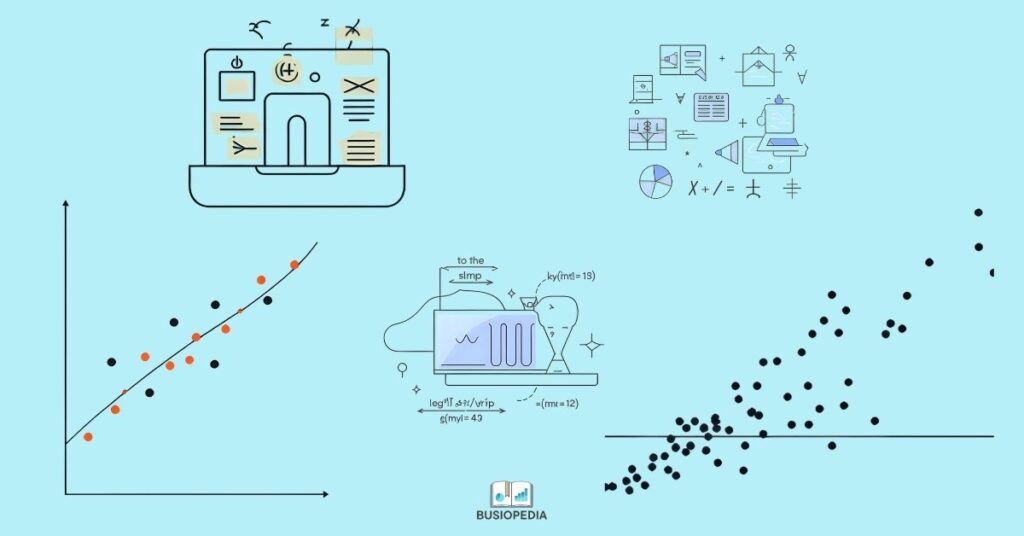
The foundation of marketing mix modeling is econometric theory, which gives economic relationships empirical substance by applying statistical techniques to economic data. To determine the causal relationships between marketing inputs (independent variables) and business outcomes (dependent variables), MMM uses regression analysis in the marketing context. According to the theoretical framework, marketing initiatives have quantifiable effects on consumer behavior, which in turn cause discernible shifts in sales, brand recognition, or other KPIs.
A number of fundamental econometric presumptions underpin MMM, including the absence of perfect multicollinearity among explanatory variables, homoscedasticity (constant variance of errors), independence of observations, and linearity in parameters. Although these presumptions might not hold in practical applications, Marketing Mix Modeling approaches use a variety of strategies to deal with these issues, such as regularization techniques, robust standard errors, and variable transformation.
Theoretical Models of Marketing Response
The relationship between marketing stimulus and consumer response is described by established marketing response functions, which are incorporated into Marketing Mix Modeling. The models that are most frequently used are as follows:
- Adstock Models: These models acknowledge that marketing initiatives have both short-term and long-term effects on consumer behavior, thereby capturing the spillover effects of advertising. In order to simulate how advertising effects wane over time, the adstock transformation uses exponential decay functions, which mirror the psychological processes of memory deterioration and competitive interference.
- Saturation Curves: When marketing response functions show diminishing returns, the marginal returns from incremental marketing investments get smaller and smaller. These saturation effects are frequently modeled using the S-curve and Hill transformation functions, which offer insights into the best spending levels and budget allocation techniques.
- Competitive Dynamics: In order to acknowledge that market context and competitive activity have an impact on marketing effectiveness, advanced MMM frameworks take into account cross-elasticity effects and competitive variables. These models take into consideration market share dynamics and competitive response functions that impact the performance of individual brands.
Methodological Framework

Data Requirements and Structure
Successful Marketing Mix Modeling calls for holistic integration of data in various dimensions. A standard MMM dataset includes:
- Dependent Variables: Key business measures like sales quantity, revenue, market share, brand recognition, or customer acquisition. These are the measures of outcomes that marketing efforts seek to change and are the key areas of focus of the econometric analysis.
- Marketing Variables: In-depth spend and activity measures for all marketing channels, including legacy media (TV, radio, print), digital media (paid search, display, social media), and promotions. The ability to be granular at a weekly or preferably daily frequency is important to pick up temporal dynamics and interaction effects.
- External Variables: Macroeconomic factors, competitive behaviors, seasonality factors, price fluctuations, distribution variables, and other external factors that could influence business results. These control variables are vital in order to tease out the actual effect of marketing activities from extraneous variables.
- Media Features: Qualitative elements of advertising campaigns such as creative implementation, placement, target parameters, and timing. They account for performance differences within channels and are used in driving creative optimization solutions.
Statistical Modeling Approaches
- Multiple Linear Regression: Ordinary least squares (OLS) regression is the fundamental method used in Marketing Mix Modeling to estimate the relationship between marketing variables and business outcomes. Although the idea is straightforward, careful consideration of model specification, variable transformation, and diagnostic testing is necessary for successful implementation.
- Time Series Modeling: To take into consideration cyclical patterns and temporal dependencies in the data, Marketing Mix Modeling commonly uses time series techniques. State-space models, error correction models, and vector auto regression (VAR) models are used to capture feedback effects and dynamic relationships between marketing activities and results.
- Bayesian Approaches: Because of its capacity to manage parameter uncertainty, incorporate prior knowledge, and produce probabilistic interpretations of results, Bayesian MMM has become increasingly popular. When working with sparse data or integrating business intuition into the modeling process, Bayesian methods are especially useful.
- Machine Learning Integration: To improve model performance and capture intricate non-linear relationships, modern Marketing Mix Modeling implementations are increasingly utilizing machine learning techniques. While ensemble approaches can increase predictive accuracy, regularization techniques like Ridge and Lasso regression aid in addressing multicollinearity and overfitting problems.
Model Calibration and Validation
MMM calls for strict calibration and validation processes to guarantee model reliability as well as business applicability. Cross-validation methods such as time series cross-validation and hold-out samples are used to determine model generalization abilities. Business logic checking, coefficient sign checking, and elasticity benchmarking relative to industry norms are also employed by Marketing Mix Modeling practitioners to guarantee that model outputs conform to marketing theory as well as practical experience.
Empirical Applications and Industry Implementation

Retail and E-commerce Applications
In the retail industry, Marketing Mix Modeling has been shown to be especially useful in maximizing omnichannel marketing efforts. Retailers use Marketing Mix Modeling to identify the synergistic impacts of online and offline marketing efforts, measure the effect of promotion campaigns on sales lift, and maximize the deployment of marketing budgets across various touchpoints. Case studies show that MMM-driven budget redistribution is able to achieve 10-30% increases in marketing ROI through redistributing spend from oversaturated to underleveraged channels.
Consumer Packaged Goods (CPG) Industry
As early adopters of MMM, CPG companies have used these models to gauge the return on traditional media investments and comprehend how brand-building and activation marketing interact. While optimizing short-term sales activation through digital and promotional channels, MMM allows CPG marketers to measure the long-term brand equity effects of television advertising.
Financial Services and B2B Applications
MMM tackles the particular difficulties posed by lengthy customer acquisition cycles and high customer lifetime values in the financial services industry. By using these models, financial institutions can better allocate their budgets throughout the marketing funnel by understanding the cumulative effect of awareness-raising efforts on consideration and conversion. The effectiveness of account-based marketing and the evaluation of intricate, multi-touch customer acquisition procedures are the main topics of B2B Marketing Mix Modeling applications.
Strategic Implications and Decision-Making Applications

Budget Optimization and Resource Allocation
The main strategic benefit of Marketing Mix Modeling is its capability to guide optimal budget allocation choices among marketing channels. By estimating marginal return on investment in each channel, Marketing Mix Modeling allows marketers to transfer funds from crowded to high-opportunity channels. The optimization routine takes into account diminishing returns curves, competition dynamics, and business constraints to suggest budget allocations that optimize overall marketing efficiency.
Scenario Planning and Forecasting
Marketing Mix Modeling structures enable advanced scenario planning functionality, enabling marketers to simulate the possible effect of different budgeting strategies, competitive reactions, and market scenarios. These forecasting features are most useful for annual planning cycles and strategic decision-making where uncertainty exists.
Performance Measurement and Accountability
Marketing Mix Modeling offers a complete system for the measurement of marketing performance that goes beyond usual attribution constraints. By measuring incremental contributions and treating baseline effects, MMM facilitates more precise marketing effectiveness assessment and enables data-driven accountability in marketing organizations.
Limitations and Methodological Considerations
Challenges with Data Availability and Quality
Data availability and quality are key limitations on MMM’s efficacy. Biased outcomes and poor decision-making can result from missing or erroneous data. To enable successful Marketing Mix Modeling implementation, organizations need to make investments in strong data collection and integration capabilities.
Trade-offs between Granularity and Aggregation
Since MMM usually works at aggregate levels, it may obscure significant differences in the efficacy of marketing across product categories, geographic areas, or customer segments. Disaggregated models add more complexity and data requirements, but they can help with these issues.
Causality and Correlation Distinctions
Even with advanced econometric methods, Marketing Mix Modeling is not always able to prove causality. Model results may be impacted by simultaneity bias, reverse causality, and unmeasured confounding variables. MMM outputs need to be carefully interpreted by practitioners in light of business expertise and supplementary analytical techniques.
Future Directions and Emerging Trends
Integration with Advanced Analytics
The future of MMM is in integration with advanced analytics functions, such as machine learning, artificial intelligence, and real-time optimization systems. These integrations hold the potential for making models more accurate, dynamic budget optimization, and more detailed insights into marketing effectiveness.
Privacy-Centric Measurement
As privacy laws and technological developments restrict traditional tracking capacities, MMM stands to become an increasingly significant measurement methodology. Its aggregate, anonymized nature also meets well with privacy-first measurement approaches while offering sound effectiveness insights.
Cross-Platform and Unified Measurement
Future developments in MMM will involve creating unified frameworks of measurement that converge online and offline touchpoints, address rising media channels, and give a complete picture of customer journey effectiveness.
Key Takeaways
- Methodological Rigor: MMM is an advanced econometric technique that necessitates close consideration of model specification, validation protocols, and statistical assumptions. Strong data foundations and analytical skills are essential for success.
- Strategic Value: MMM’s main strategic value is found in its capacity to measure incremental marketing contributions, optimize the allocation of marketing resources, and facilitate data-driven decision-making in intricate marketing ecosystems.
- Holistic Perspective: In contrast to conventional attribution models, MMM offers a holistic perspective on marketing efficacy that takes into consideration offline media, synergistic effects, and sustained brand-building initiatives.
- Implementation Challenges: Organizational dedication to data-driven decision-making, substantial investments in data infrastructure, and analytical skills are necessary for the successful implementation of MMM.
- Evolving Landscape: MMM is becoming a vital tool for contemporary marketing companies as a result of developments in statistical techniques, machine learning integration, and privacy-centric measurement strategies.
- Complementary Measurement: To provide comprehensive insights into marketing effectiveness, MMM should be seen as a component of an ecosystem of measurement that also includes attribution modeling, experimentation, and qualitative research techniques.
Conclusion
Marketing Mix Modeling is an advanced and mature marketing measurement technique that solves most of the limitations surrounding traditional attribution methods. Through the application of econometric concepts and advanced statistical methods, Marketing Mix Modeling equips marketers with the capability to optimally allocate resources, measure marketing effectiveness, and make strategic decisions. As the marketing environment further shifts with new mediums, privacy limitations, and technological possibilities, MMM’s cumulative and complete methodology makes it an increasingly useful part of future marketing measurement systems.
The effective use of Marketing Mix Modeling demands strong organizational investment in data quality, analytical capacity, and evidence-driven decision-making. Nevertheless, organizations that are effectively able to leverage Marketing Mix Modeling capabilities are likely to see dramatic gains in marketing ROI, strategic clarity, and competitive edge through more efficient resource allocation and optimization of performance.
Related Articles:
- How to Calculate IRR (Internal Rate of Return): Step-by-Step Guide
- How to Calculate Amortization: Step-by-Step Guide
- How to Master Real Estate Accounting for Property Development
- What is Working Capital and How to Calculate: Your Complete Guide to Financial Success
- How to Create an Amazon Seller Account: Complete Step-by-Step Guide
- Top 5 Financial Ratios Every College Student Should Know (With Examples)
- How to Register an LLC in America: A Complete Guide for Beginners, Foreigners, and Entrepreneurs
- What is Inbound Marketing: Why Smart American Businesses Are Making the Switch
- Top 5 Best Bookkeeping Software to Work with Accounting: 2025 Guide
- Remote Marketing Jobs: A Step-by-Step Guide to Opportunities and Strategies to Succeed
- What are Accounts Payable? Its Definition, Process, and Best Practices
- 10 Fundamental Accounting Principles Every Business Owner Must Know
- Fixed Index Annuities: Your Way to Financial Confidence and Security
- QuickBooks Excellence: Transform Your Accounting Game with These Powerful Techniques
- Inbound vs. Outbound Marketing: The Great Debate That’s Reshaping Business Strategy
- How to Master Balance Sheet Analysis? Expert Guide with Examples
- Income Statement Formats: Complete 2025 Guide with Examples and Structure
- What Are Current Liabilities And Why They Matter For Financial Success
- Current Assets Essentials: Elevate Your Financial Management Game
- Remote Payroll Jobs: Your Gateway to Flexibility and Financial Growth
- Payroll Advance: Powerful Ways to Enhance Workplace Morale
- Powerful Mobile Marketing Strategies You Must Try
- Best Marketing Tools In An Advertising Plan
- Mastering Revenue Expenditure for Business Success
- Market Research And Its Importance: A Comprehensive Review
- What You Should Know? Notes Payable And Accounts Payable
- Digital Marketing And Strategies: A Comprehensive Review with Examples
- Are Annuities the Best Investment for a Bright Future? A Comprehensive Analysis
- Understanding Capital Expenditure: Definition, Significance, and Its Association in Financial Decision-Making
- Difference Between Accounting And Finance: A Proven Comprehensive Guide For Beginners
- Difference between Annuity due and Ordinary Annuity
- Essential Accounting Software for Small Enterprises
- 5 Best Software For Small Business Accounting